A Practical System for Over-40 Practitioners Who Don’t Have More Time — But Still Want Real Progress

Make one class per week count — without adding sessions, wrecking your recovery, or pretending life doesn’t exist.

Until You Learn How to Actually Improve on Limited Mat Time

A simple, proven system to make real progress in BJJ — even if you only train once per week and can’t add more mat time.

Built from years of training once per week — not theory from full-time athletes.

If you’re over 40…
And Brazilian Jiu Jitsu is something you genuinely care about…

But you can only train once per week…

You’ve probably had this thought:

“I’m showing up… but I’m not actually moving forward.”
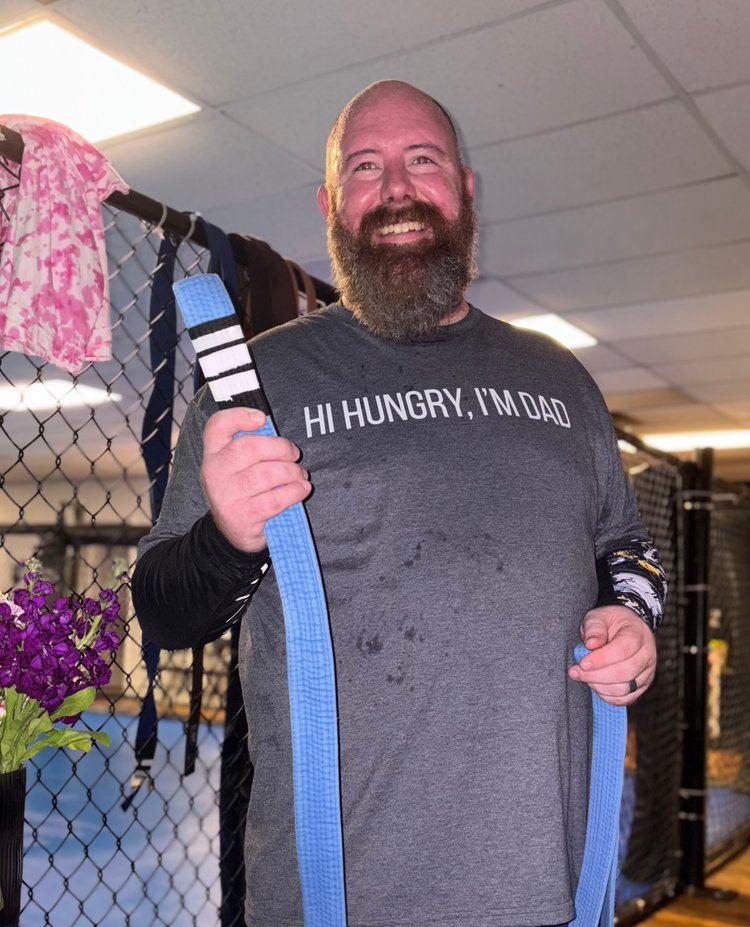
image.png

You’re not lazy.
You’re not inconsistent.
You’re not missing heart.

Life just doesn’t allow 4–5 sessions per week anymore.

Work.
Family.
Recovery that matters more than it used to.

So while others keep saying “just train more”…

You quietly wonder:

Is this just maintenance now?

Is this as good as it gets?

And that’s the part that stings.

Because you don’t want to quit.

You just don’t want to feel stuck.

Why This Is So Frustrating

It’s not just that progress feels slow.

It’s that it feels inconsistent.

Techniques you were confident in last week feel unfamiliar by the next.

You recognize positions — but react too late.
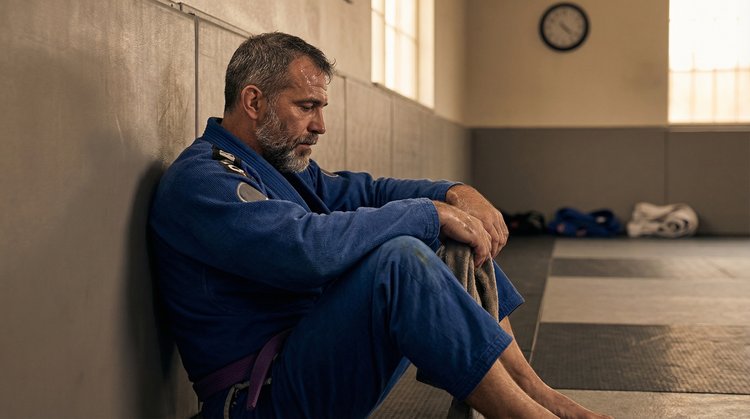
image.png

You leave class unsure whether you improved or just survived.

Meanwhile, people who train more often seem to move forward automatically.

And that creates a quiet tension:

You’re showing up.
You’re trying.
You care.

But effort alone doesn’t seem to be enough.

That’s what makes this hard.

You don’t want to quit.

You just don’t want to feel like you’re spinning your wheels.

The Truth No One Tells You

Most BJJ advice is built for people who train 4–6 days a week.

You don’t.

And that changes everything.

When you only train once per week, the problem isn’t effort.

The problem is structure.

If you show up without a system, you spend most of your class time:

Re-experiencing positions
Re-learning familiar techniques
Reacting instead of recognizing
Trying to remember instead of understanding

By the time you start settling in…

Class is over.

Then six or seven days pass.

And the cycle resets.

Progress doesn’t stall because you lack commitment.

It stalls because once-per-week training demands a different approach.

Especially after 40.
Especially when recovery matters.
Especially when your schedule isn’t changing.

What You’re About to Discover

Inside this system, you’ll learn how to:

Walk into class knowing exactly what you’re working on — instead of guessing

Leave each session with one clear improvement instead of vague frustration

Recognize positions earlier so you stop reacting late during rolls

Build a smaller, more reliable game that actually works with your body

Stop “resetting” every week and start compounding progress

Protect your recovery so you can keep training long-term — without nagging setbacks

Turn one weekly class into structured progress instead of survival

No extra sessions.
No marathon drilling at home.
No grinding your joints into dust.

Just a system that makes limited mat time multiply.

I Was Doing Everything “Right”… And Still Resetting Every Week

hen I started training, I assumed more time was the answer.

When I returned in December 2022 at a new school, I made a decision:

If once per week was my reality, I was going to make it work.

At first, I did what everyone does.

I paid attention.
I tried to remember techniques.
I rolled hard.

And every week felt like a partial reset.

Positions I had seen before felt unfamiliar again.
I recognized what was happening — but reacted too late.
Some classes felt productive. Others felt random.

That inconsistency bothered me more than losing rounds.

So I stopped asking:

“How do I train more?”

And started asking:

“What is actually breaking in once-per-week training?”

That question changed everything.

What I Discovered

The issue wasn’t effort.

It was structure.

Without realizing it, I was wasting most of my limited mat time on:

Re-familiarization
Information overload
Late reactions
Unfocused rolling

So I started experimenting.

Before class, I chose one focus.
During class, I tracked what failed first.
After class, I reinforced only what mattered.

I narrowed my game.
I stopped chasing novelty.
I protected recovery instead of ignoring it.

Over time, something changed.

Techniques didn’t vanish as quickly.
Rolls felt calmer.
Progress stopped feeling random.

Not because I trained more.

Because I trained differently.

That’s the system inside this book.

But I couldn’t train more.

I started in 2017.
I earned my blue belt in December 2019.
And for most of that time, I trained once per week.

Then the pandemic forced a long break.
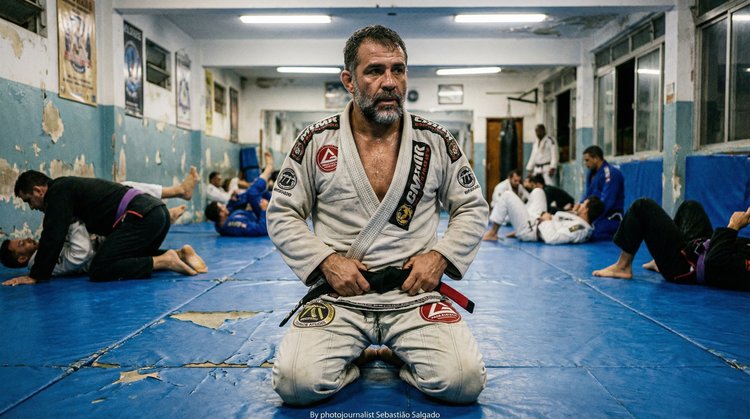
image.png

The Reality

I couldn’t train more — and I wasn’t going to pretend I could.

Life had already filled the calendar.

Work.
Family.
Responsibilities.
Recovery that suddenly mattered a lot more.

Once per week was all I had.

And that made me quietly wonder if BJJ was slowly becoming pointless.

The Question That Changed Everything

I stopped asking:

“How do I train more?”

And asked a better question:

“How do I get more out of the training I already have?”

That’s when things changed.

Because most BJJ advice is built for people who live on the mats.

Not for people like us.

What Finally Worked

I stopped trying to remember everything.

I focused on:

  • What I thought about before class

  • What I paid attention to during class

  • What I reinforced after class

I built a game that fit my body, my age, and my schedule.

Slowly… progress came back.

Techniques stuck longer.
Rolls felt calmer.
Classes felt purposeful again.

I wasn’t winning tournaments.
I wasn’t training every day.
I was just a normal person trying to get better with the time I had.

And it worked.

Introducing: How to Get Better at BJJ Without Training More

This isn’t more techniques.

It’s not conditioning.
It’s not drilling for hours at home.
And it’s not “just push harder.”

This is a simple, repeatable system for over-40 BJJ practitioners who can only train once per week — and still want to improve.

It shows you how to multiply the results of the training time you already have.
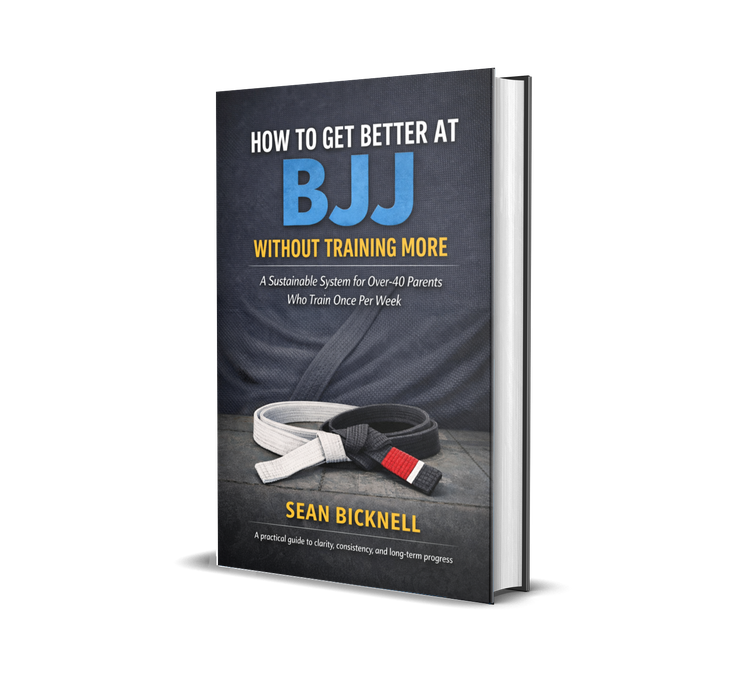
image.png

What This System Helps You Do

Inside the book, you’ll learn how to:

Decide what to focus on before class — so you stop drifting from technique to technique

Identify what fails first in bad positions — instead of guessing what to fix

Roll with one clear intent — instead of reacting out of urgency

Leave each class with a defined takeaway — not a blur of information

Build a smaller, reliable game that fits your body and energy level

Reinforce learning between sessions — so you don’t reset every week

Make recovery decisions that protect next week’s training

This isn’t about adding more work.

It’s about turning one class per week into structured progress instead of random effort.

Imagine Walking Into Class Like This…

You already know what you’re working on.

Not a technique.

A focus.

You’re not trying to remember everything.
You’re tracking one thing that actually matters.

When a position breaks down, you don’t panic.

You notice what failed.

You adjust earlier.

When the round ends, you don’t feel confused.

You know whether you improved — because you know what you were measuring.

You leave class with clarity instead of questions.

Same schedule.

Different experience.

Not because you trained more.

Because you trained with structure.
image.png

Why This Works (And Why It’s Not Theoretical)

I started training in 2017.

For most of my early training, I went once per week.

In December 2019, I earned my blue belt — without ever having a full-time training schedule.

Then the pandemic forced a long break.

When I returned in December 2022 at a new school, I made a decision:

If once per week was going to be my reality, I needed a structure that worked under that constraint.

So everything inside this book was built under one rule:

If it didn’t work with one class per week — it didn’t stay.

No “in theory this should help.”

No “if you just had more time.”

Just repeatable systems that survive real life.

After 40, intensity stops being the advantage.

Efficiency becomes the advantage.

This system prioritizes:

Decision-making over athleticism
Recognition over reaction
Familiar positions over endless novelty
Retention over information overload

It wasn’t built in ideal conditions.

It was built in limited ones.

And that’s exactly why it works.

What’s Included

How to Get Better at BJJ Without Training More

A complete, structured system designed specifically for over-40 practitioners training once per week.

Inside the book, you’ll learn how to:

  • Choose the right focus before class

  • Diagnose what actually fails during rolls

  • Reinforce learning between sessions

  • Build a smaller, reliable game

  • Protect recovery without sacrificing progress

  • Stay consistent without burning out

You’ll also receive four practical support tools:

Bonus #1: The Visualization Cheat Sheet
A structured way to reinforce positions between sessions in minutes.

Bonus #2: The Retrieval Practice Playbook
A simple framework for strengthening recall so techniques don’t disappear week to week.

Bonus #3: Over-40 Game Builder Worksheet
A guided worksheet to help you clarify and narrow your personal game.

Bonus #4: The Consistency Manifesto
A short, grounding document that protects long-term training sustainability.

Everything is included in a single purchase.
No subscriptions. No upsells required.

image.png

Investment

One-time payment: $27

That’s it.

Rewritten Guarantee + Closing Section

Try It for 30 Days

Go through the system.

Apply it for a few weeks.

Use it before and after class.

If you don’t feel more clarity, better retention, and a stronger sense of direction in your training…

Send one email within 30 days and you’ll receive a full refund.

No forms.
No explanations required.

If it doesn’t help you train better once per week, you shouldn’t pay for it.

A Simple Decision

You can keep training once per week and hope something eventually clicks.

Or you can approach your next class with:

  • A clear focus

  • A structured way to diagnose problems

  • A smaller, reliable game

  • And a system built specifically for your reality

Same schedule.

Better structure.

That’s the difference.

Begin Using It Before Your Next Class

Get How to Get Better at BJJ Without Training More
Plus all included tools
For a one-time payment of $27.

Start training with structure — not guesswork.